By Lawal Abdullahi
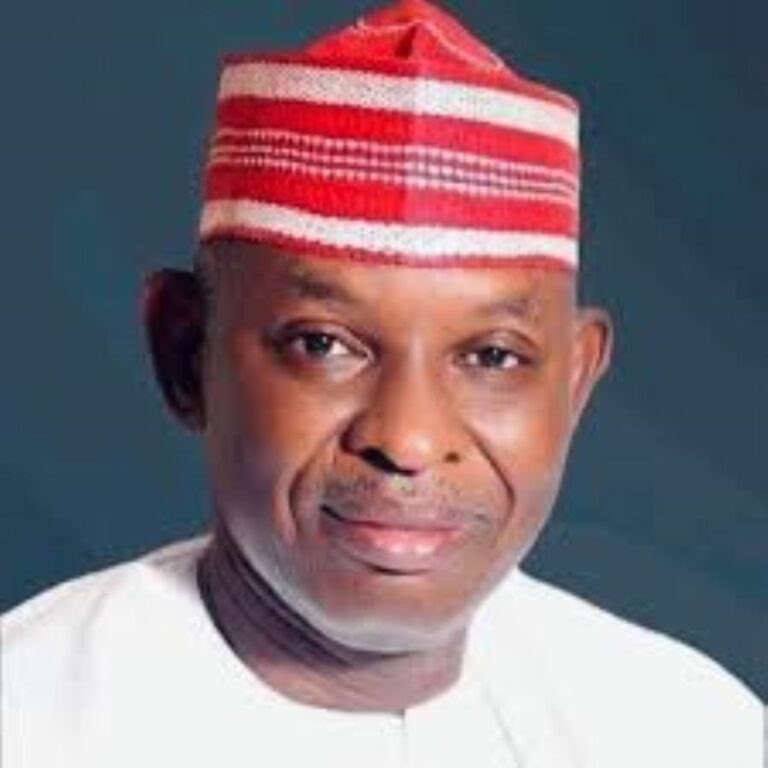
On the night Abuja turned its gaze toward service beyond party loyalty, Kano found itself called by name. In the bright hall of the Presidential Villa, far from the dust and bustle of Kurmi market and the farmlands of Rano, Governor Abba Kabir Yusuf stood before the nation and received an honour that carried more than protocol. It was a rare national salute to performance, offered across political divide, and for Kano it felt like a quiet public vindication of daily struggles that had finally been seen.
When the 2025 Nigeria Excellence Award in Public Service was announced in his name, it was not difficult for ordinary people across the state to connect the dots. The trader in Sabon Gari who now moves with better road access, the teacher in Dawakin Tofa who finally has pupils seated on desks, the nurse in Kumbotso who now works with functional equipment, and the farmer in Garun Malam who received timely inputs all found pieces of their own stories inside that moment of recognition.
The honour was presented on behalf of President Bola Ahmed Tinubu by the Secretary to the Government of the Federation, Senator George Akume. In a political climate often shaped by suspicion and rivalry, the recognition of an opposition governor stood as a reminder that service still commands attention beyond party lines. For Kano people, it confirmed what many already believed that visible work still carries weight in national judgment.
Across the state, the signs of that work are not hidden. In education, long neglected school structures have been brought back to life. Classrooms were rehabilitated, roofs restored, furniture supplied, and learning spaces made fit again for young minds. Thousands of teachers were recruited, easing pressure on overcrowded classrooms and restoring balance to a system that had struggled for years. For parents who once worried about the future of their children in underfunded schools, confidence has slowly returned.
Healthcare followed the same practical path of revival. Primary healthcare centres across the local governments received attention through upgrades, supplies, and personnel deployment. In communities where sickness once meant long travel or helpless waiting, people now walk into health facilities with greater hope of being attended to. For mothers, children, and the elderly, the presence of care is no longer an exception but an expectation.
In agriculture, the administration returned its focus to the roots of Kano economy. Support reached farmers through fertilisers, seeds, and extension services delivered with better timing. Productivity improved not by miracle but by method. From the fields of Bichi to the plains of Garko, farming has regained its sense of dignity and possibility. The land once again speaks of sustenance rather than survival.
Within the Kano metropolis, urban renewal began to reshape daily experience. Roads were opened and repaired. Drainage systems were cleared. Flood prone areas received attention. Public infrastructure that once symbolised decay now reflects restoration. The city that has long served as a major commercial heartbeat of the North is slowly reclaiming its form with order and movement.
It was this spread of impact across education, health, agriculture, infrastructure, and social welfare that earned Governor Abba Kabir Yusuf the Nigeria Excellence Award in Public Service. He received it alongside governors from Zamfara, Bauchi, Adamawa, Enugu, and Akwa Ibom States at a ceremony organised by Best Media Relations in partnership with the Office of the Secretary to the Government of the Federation. The event was presided over by the Chairman of the Board of Trustees of the award, Justice Mary Odili retired. Other recipients included leaders of key national institutions such as NDLEA, EFCC, NFIU, Customs, Immigration, NEMA, and senior federal ministers.
Yet for Kano people, the meaning of the award went deeper than the list of dignitaries present. An opposition governor being publicly honoured by a federal government from another political family carried a lesson that governance can rise above rivalry. It confirmed that results still create bridges where politics often builds walls.
True to character, Governor Yusuf did not keep the honour to himself. He returned it to the people of Kano. He dedicated it to their patience, resilience, and faith in leadership. He renewed his promise to deepen people centred governance and pursue development that does not decorate the surface but touches daily living.
There is a quiet philosophy behind such moments. Power is loud but brief. Service is quiet but lasting. Offices change hands, applause fades, and ceremonies pass into memory, but the effect of a repaired school, a functioning clinic, a productive farm, and a safe road remains long after the crowd has gone. These are the footprints that leadership leaves behind.
Politically, the recognition challenges the old belief that opposition must always mean exclusion. It sends a message to young Kano citizens watching from lecture halls, market stalls, workshops, and farmlands that leadership is not measured by loud promises but by consistent delivery. It also tells public office holders that credibility cannot be borrowed, it is earned slowly through visible effort.
With this honour, Kano stands taller in national conversation not as a state defined only by contests of power but as one increasingly described through performance. For Governor Abba Kabir Yusuf, the award is both affirmation and responsibility. For the people, it is encouragement and reminder that their collective future is shaped not by chance but by deliberate leadership.
When history eventually records this moment, it may not focus on the elegance of the hall or the ceremony of the night. It will remember that in a season of division, service crossed political boundaries, and Kano through one of its own reminded the nation that the work still speaks.
Lawal Abdullahi, writes from Kano