By Lamara Garba
For decades, the annual Hajj pilgrimage has remained one of the largest religious gatherings on earth, attracting millions of Muslims from every continent to the holy cities of Makkah and Madina in the Kingdom of Saudi Arabia. While the pilgrimage is spiritually uplifting, it has also historically come with enormous logistical challenges, including overcrowding, congestion, heat-related emergencies, and at times tragic stampedes within the holy sites.
But this year’s Hajj exercise has introduced a different reality — one defined by orderliness, effective crowd management, improved security, and a smoother spiritual experience for pilgrims. At the center of this transformation is the introduction of the Nusuk policy by the Saudi authorities, a digital regulatory framework that has significantly reduced illegal participation in Hajj and restored sanity to the holy sites.
The policy, introduced through the Nusuk digital application, ensures that only duly registered and approved pilgrims are granted access to the sacred rituals and locations associated with Hajj. From visa processing to accommodation, transportation, identification, and access to the holy sites, every pilgrim must now be fully captured within the Nusuk system.
Anyone not registered on the platform is automatically denied access to key locations including the Grand Mosque in Makkah, the Prophet’s Mosque in Madina, Mina, Muzdalifah, and Arafat.
This decisive policy appears to have achieved what many observers once considered impossible — a massive reduction in overcrowding during Hajj.
For years, one of the major concerns during Hajj was the infiltration of undocumented pilgrims, especially illegal immigrants and unregistered worshippers from neighboring countries and parts of Africa. Many entered the holy cities without official Hajj permits, thereby overstretching facilities and contributing heavily to congestion around the sacred sites.
The situation often made movement difficult for genuine pilgrims who had spent huge sums of money to perform the religious obligation through approved channels.
However, this year, the story is remarkably different.
Our correspondent, who is currently participating in the pilgrimage, observed a calmer and more organized atmosphere both in Madinatul Munawwara and within the precincts of the Grand Mosque of Ka’aba.
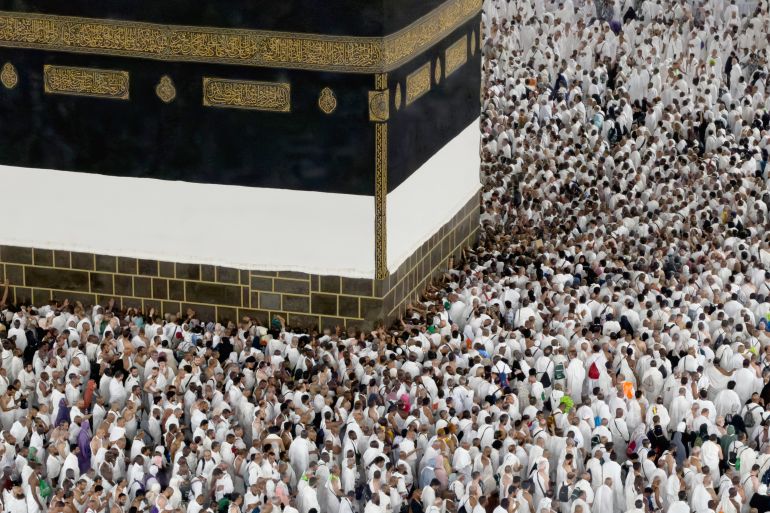
Unlike previous years when worshippers struggled through human traffic for hours before getting access to prayer spaces or performing Tawaf around the Holy Ka’aba, pilgrims now experience relative ease in conducting their acts of worship.
In what would have seemed unimaginable in the past, this reporter was able to complete the Tawaf — the circumambulation around the Ka’aba — within just 30 minutes due to reduced congestion and improved movement coordination by Saudi officials.
The atmosphere around the Mataf area was notably less chaotic. Pilgrims moved with greater comfort, fewer physical struggles, and better concentration during prayers and supplications.
Many pilgrims who spoke with our correspondent expressed satisfaction over the new arrangements, describing the Nusuk policy as a timely intervention that has enhanced both safety and spirituality during Hajj.
A pilgrim from Kano State, Alhaji Musa Abdullahi, said the difference between this year and previous pilgrimages was “clear and undeniable.”
“In the past, people pushed one another because of overcrowding. Sometimes elderly pilgrims suffered greatly. But this year, movement is easier and security personnel are more effective because they know exactly who is authorized to be here,” he explained.
Another Nigerian pilgrim, Hajiya Zainab Suleiman, described her experience in Madina as peaceful and spiritually fulfilling.
“You can now enter the mosque, pray peacefully and leave without unnecessary pressure. Before now, some people spent hours struggling just to find space. The Nusuk arrangement has brought discipline,” she stated.
A pilgrim from Ghana, Ibrahim Mustapha, also commended the Saudi authorities for what he called a “technology-driven success.”
“The authorities deserve appreciation. This system has reduced illegal entries and helped genuine pilgrims enjoy their worship. You can feel the difference immediately you arrive,” he noted.
Beyond comfort, the policy is also being viewed as a major safety achievement.
Hajj history has witnessed several unfortunate incidents linked to overcrowding and uncontrolled human movement. Managing millions of pilgrims within confined spaces under extreme temperatures has always remained a daunting responsibility for Saudi authorities.
But by tightening access through digital verification and restricting movement only to registered pilgrims, the Kingdom appears to have significantly minimized the risks associated with uncontrolled crowds.
Security personnel stationed across the holy sites now rely heavily on electronic verification systems linked to the Nusuk application. Pilgrims without valid permits are quickly identified and prevented from accessing sensitive areas.
The policy has equally improved transportation coordination, accommodation management, feeding arrangements, and emergency response services.
Observers believe the new system represents a major shift in how modern Hajj administration will be conducted in the future.
Saudi Arabia has in recent years invested heavily in digital technology, smart crowd-control systems, artificial intelligence, surveillance networks, and infrastructure expansion aimed at improving the pilgrimage experience.
The Nusuk initiative appears to be another major milestone in that direction.
Despite initial concerns in some quarters that the strict regulations could inconvenience intending pilgrims, many now believe the long-term benefits outweigh the challenges.
Religious scholars and Hajj administrators argue that preserving human life and ensuring pilgrims perform their religious obligations safely should remain the top priority.
Indeed, for many pilgrims, the reduced crowd this year has brought back the true essence of worship — devotion, reflection, patience, and spiritual connection without the constant fear of suffocation or physical struggle.
Inside the Grand Mosque, worshippers now spend more time in contemplation rather than battling human congestion. Elderly pilgrims and women especially appear to benefit from the calmer environment.
At Mina and Arafat, where overcrowding traditionally reaches alarming levels during peak Hajj periods, officials have also maintained tighter control of movement using the Nusuk verification process.
Many pilgrims interviewed described the exercise as one of the smoothest Hajj operations witnessed in recent years.
While no system is entirely perfect, the Saudi authorities appear to have demonstrated that effective technology, strict enforcement, and proper planning can substantially improve one of the world’s largest annual religious gatherings.
As millions of Muslims continue to arrive for the sacred rites, one message is becoming increasingly clear: the era of uncontrolled and illegal Hajj participation may gradually be coming to an end.
And for genuine pilgrims seeking spiritual fulfillment in peace, safety and dignity, that may be one of the most important developments in modern Hajj administration.