By Admin
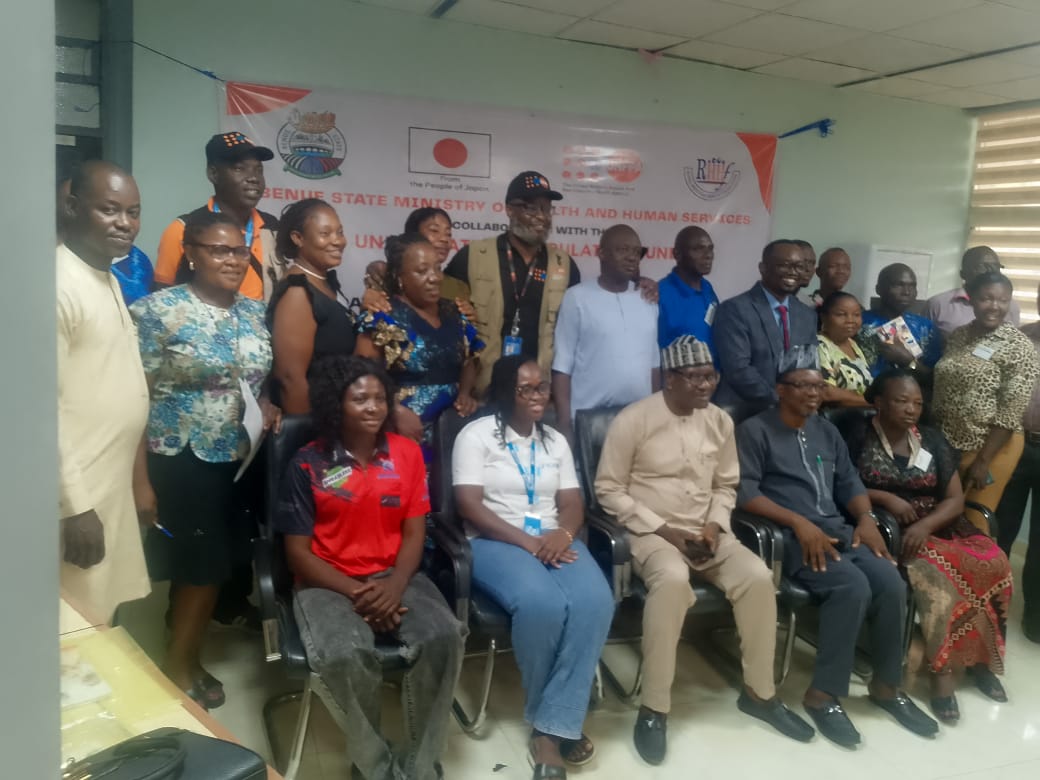
The Benue Government, United Nations Population Fund (UNFPA) and Royal Heritage Health Foundation say they have trained frontline healthcare workers in the state to strengthen reproductive health and GBV responses.
Speaking at the training in Makurdi on Monday, the state Commissioner for Health and Human Services, Dr Paul Ogwuche, described the programme as critical to improving healthcare delivery for vulnerable populations.
The training, he said, focused on Sexual and Reproductive Health in Emergencies (SRHiE), Clinical Management of Rape (CMR), and Mental Health and Psychosocial Support (MHPSS), Gender-Based Violence (GBV), and Protection from Sexual Exploitation, Abuse and Harassment (PSEAH).

Ogwuche, represented by the Permanent Secretary of the ministry, Dr Cephas Hough, commended the partners for partnering with the state government to strengthen the capacity of frontline health workers.
He said that the training would equip participants with the knowledge and practical skills needed to provide quality, integrated and survivor-centred healthcare services.
“The issues to be covered during this training are of immense public health importance and require knowledgeable, skilled and compassionate healthcare providers.
“The knowledge and skills acquired will improve health outcomes and strengthen referral systems within our health facilities and communities,” he said.
The commissioner urged participants to actively engage in the sessions and apply the lessons learned in their respective health facilities to improve service delivery.
Also speaking, Mr Christian Macaulay, the Benue Humanitarian Coordinator of UNFPA, said the training became necessary due to the worsening humanitarian crisis caused by insecurity in the state.
According to him, more than 600,000 people have been displaced across Benue, including about 150,000 women of reproductive age and between 16,000 and 17,000 pregnant women.
He said the displacement had placed enormous pressure on already overstretched health facilities in host communities, increased the risk of maternal deaths and other reproductive health challenges.
“No woman should die while giving life. This is why strengthening the capacity of frontline healthcare workers is essential to delivering quality reproductive health services in emergency settings,” he said.
Macaulay explained that the training formed part of humanitarian intervention funded by the Government of Japan to provide integrated reproductive health and GBV services in conflict-affected communities.
He disclosed that UNFPA had recently donated reproductive health kits capable of serving about 120,000 people, saying that the supplies must be effectively utilised by trained health workers.
He urged participants to share their field experiences during the training to improve healthcare delivery, particularly for women and girls affected by conflict.
Ms Ihuoma Owuama, Emergency Specialist at UNICEF, described the training as timely in addressing the health needs of women, children and vulnerable populations in humanitarian settings.
She said crises increased the risks of maternal and newborn deaths, gender-based violence and disruption of essential health services, making capacity building for frontline workers critical.
Owuama said that improving sexual and reproductive health requires a multisectoral approach involving health, nutrition, WASH, education, child protection, mental health and community engagement.
She highlighted the strong collaboration among UNFPA, UNICEF, WHO, IOM, government and Health Cluster partners, citing the coordinated Yelewata emergency response as evidence that partnerships strengthen lifesaving services and ensure no one is left behind. NAN