By Dorathy Aninge
The Administration of Criminal Justice Law (ACJL) High Level Monitoring Committee in Benue has rallied relevant justice stakeholders to enhance speedy dispensation of criminal cases pending in courts in the state.
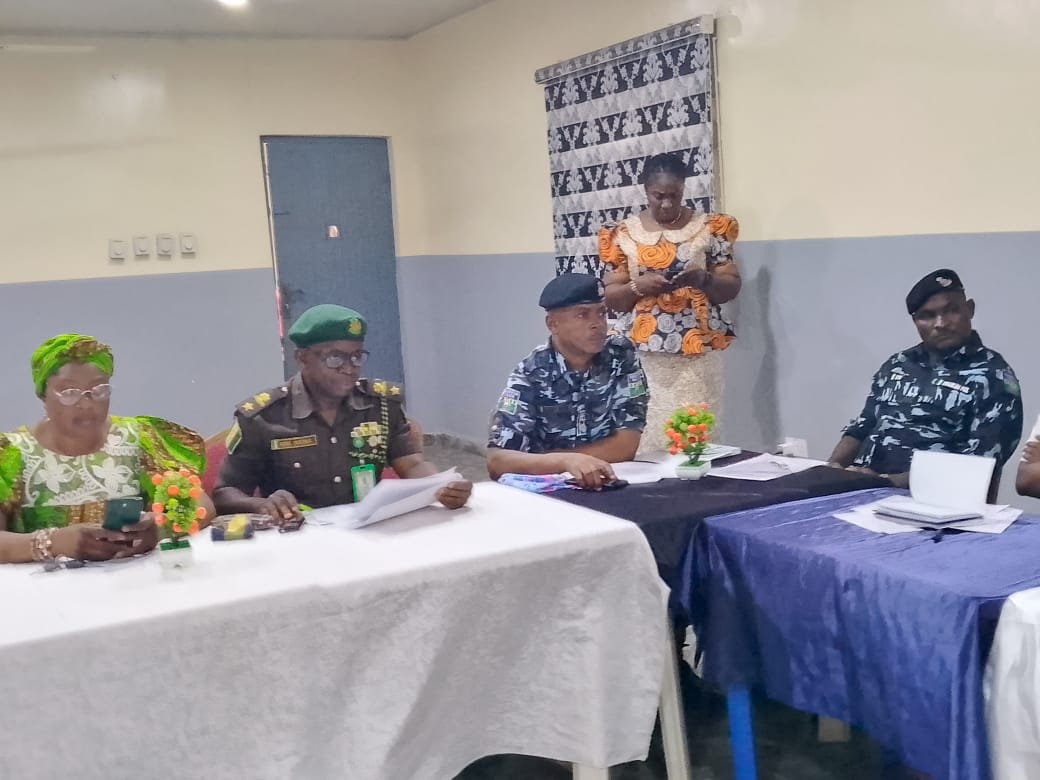
Dr Victoria Daaor, the committee’s chairman, said on Friday at a validation meeting in Makurdi that the move was a follow-up to the monitoring committee’s advocacy visit to correctional centres in the state.
Daaor stated that part of the committee mandate was to strengthen the justice system, promote non-custodial measures for offenders, and also ensure there is good collaboration among all the justice sector actors.
“One of the things we wanted to do was to bring to light the conditions we found at the correctional centres.
“So we brought pro bono lawyers, civil society organisations, representatives of the correctional centres, the police, and other relevant stakeholders to share our findings and encourage commitments towards decongesting the prisons.
“We found a lot of offenders who ought not to have been there. Some had overstayed their sentencing periods due to filing errors, something as simple as that.
“I am very glad the meeting achieved its aim because we got a lot of commitments from stakeholders, which we, as a committee, will now follow through to ensure results.
“We found people who do not have lawyers, so they remain there without representation. We also saw cases filed in the wrong courts, courts that do not have jurisdiction over those matters,” she said.
The chairman expressed concern that offenders with such cases keep being remanded for as long as possible.
She further said that the committee even found people who have not been able to meet their bail conditions, which were very minimal.
“There were also cases where family members did not even know where the inmates were, so they had no one reaching out to help them.
“These are some of the issues, aside from the fact that the correctional centres are in a deplorable state and need to be improved.
“We are going to follow up with all the stakeholders who made commitments to help with some of the cases we identified,” she stated.
Mrs Magdalene Igbazua, CLEEN Foundation partner in Benue, lauded the foundation for establishing and empowering the committee to embark on the humanitarian assignment.
Igbazua stated that the essence of the meeting was to ensure that some of the inmates get lawyers to stand in for them and help pursue their cases, especially those that have been around in the courts without representation.
“During the meeting, two of the inmates, who were said not to have lawyers, had a lawyer volunteer to take up their cases and pursue it.
“Then there are two other ladies who were said to be mentally unstable, yet they are still in the correctional facility. The Civil Society Organisations (CSOs) have taken it up and will follow up on the case to see how they can help those ladies get treatment.
“The Legal Aid Council has already taken up a number of cases, and I believe that if each stakeholder who committed to taking one or two cases follows through on the commitments made today, we will, before the end of this year, have a record of positive outcomes.
“The police and Nigerian Correctional Services are also committed to doing their part,” she said.
Mrs Lilian Addingi, State Coordinator, Legal Aid Council, said that the council’s main mandate is to help the indigent access free legal services.
Addingi said they were identifying matters that need the kind of representation they have not been able to access.
“I wouldn’t be able to say off-hand, but I think there are about 10 cases that we have identified, some which we just handed over to civil society organisations because of their peculiar nature, especially those requiring psychological and psychiatric support.
“So we’re looking at some of those cases that are above three years in custody, to make sure their legal rights and human rights are enhanced as much as we can,” she said.
The News Agency of Nigeria (NAN) reports that the police, correctional personnel, members of the Nigerian Bar Association, and many other stakeholders attended the meeting NAN