By Emmanuel Antswen
The United Nations Population Fund (UNFPA) and the World Health Organization (WHO) have strengthened Benue’s response to gender-based violence and sexual reproductive healthcare for Internally Displaced Persons (IDPs).
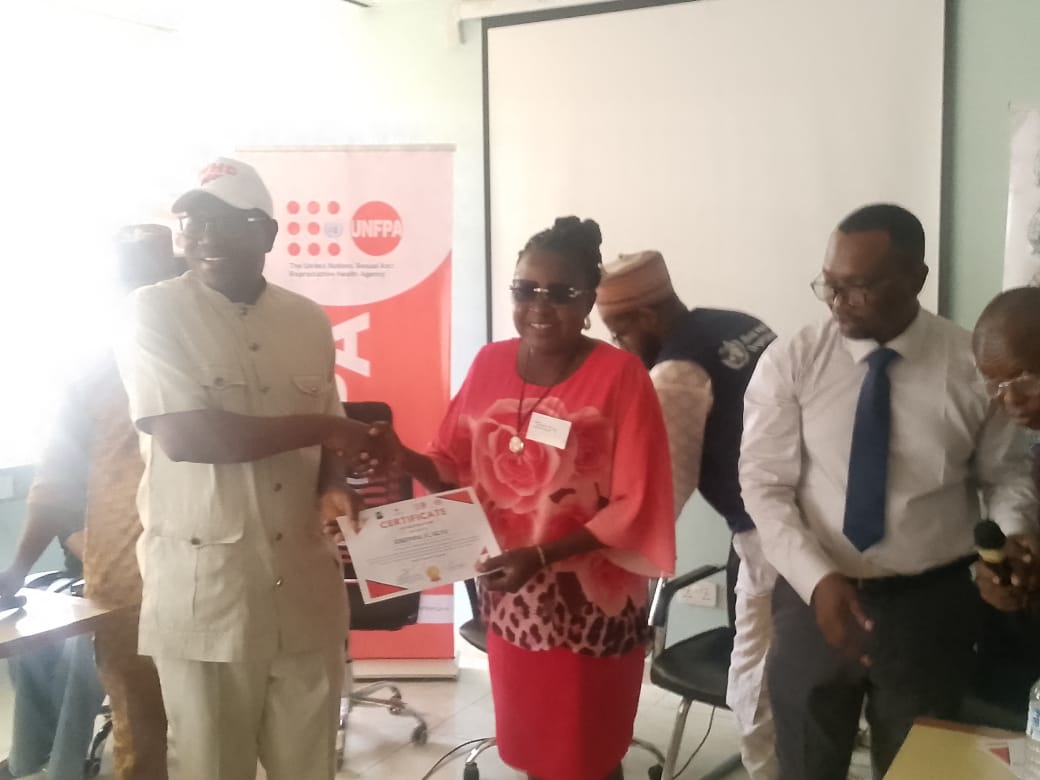
The international organisations, in collaboration with the Benue State Ministry of Health and Human Services, with support of the Royal Heritage Health Foundation (RHHF), trained 30 frontline healthcare workers to improve healthcare services for vulnerable populations.
The training equipped the healthcare workers with skills in clinical management of rape, mental health, sexual and reproductive health in emergencies, and protection of vulnerable populations.

Speaking during the closing ceremony, WHO State Coordinator, Dr Abdulmalik Mohammed, said the programme was designed to improve access to quality healthcare services for IDPs and other vulnerable groups.
Mohammed described the training as a critical intervention to address the health and psychosocial needs of displaced populations affected by humanitarian crises.
The state coordinator said participants drawn from 15 healthcare facilities had acquired the knowledge and practical skills required to provide quality GBV, mental health and reproductive health services.
“This training consolidates previous capacity-building efforts across these facilities and will ensure that vulnerable persons, especially IDPs, have improved access to quality healthcare services,” he said.
The WHO coordinator said UNFPA had complemented the training by supplying reproductive health kits containing essential medicines, medical consumables and equipment needed for effective service delivery.
According to him, the kits will enable health facilities to provide comprehensive reproductive health services to ensure that women seeking care receive timely and quality treatment.
The Lead Facilitator, Dr Dalandi Idrissa, said participants were drawn from primary, secondary and tertiary healthcare facilities as well as agencies coordinating emergency health responses in the state.
He explained that the selection focused on facilities serving communities with large numbers of displaced persons.
Idrissa stated that the reproductive health kits were globally standardised emergency supplies designed to bridge service gaps during humanitarian crises.
He listed the contents to include clean delivery kits, family planning commodities, rape treatment kits, Sexually Transmitted Infections (STIs) management supplies, obstetric equipment, surgical materials, blood transfusion supplies, anaesthetics and essential medicines.
According to him, the kits are intended to complement existing health services disrupted by displacement and increased demand in affected communities.
“The participants are now better equipped to identify and manage cases of intimate partner violence, sexual violence and other gender-based violence, while referring complicated cases for specialised care,” he said.
The Benue Commissioner for Health and Human Services, Dr Paul Ogwuche, lauded the UNFPA, WHO and RHHF for organising the five-day capacity-building training for healthcare workers at no cost to participants.
Represented by the ministry’s Permanent Secretary, Dr Cephas Hough, Ogwuche said the programme would strengthen healthcare services across the state by improving the skills of frontline workers.
He praised the participants for their commitment and urged them to transfer the knowledge gained to colleagues in their respective health facilities to ensure wider impact and continuity of quality service delivery.
He also expressed the ministry’s gratitude to the partners for supporting Benue’s health sector.One of the participants, Dr William Terzungwe of Benue State University Teaching Hospital (BSUTH), described the training as impactful.
Terzungwe said it had broadened his professional knowledge and improved his capacity to manage survivors of rape and intimate partner violence.
He pledged to transfer the knowledge gained to colleagues in his workplace, expressing confidence that the training would improve service delivery to vulnerable patients across the state. NAN