A group of five Republican lawmakers in the U.S. House of Representatives has introduced sweeping legislation aimed at holding the Nigerian government and specific political and ethnic actors accountable over alleged religious persecution and mass atrocities, escalating diplomatic pressure even as Washington expands security cooperation with Nigeria.
The proposed measure, titled the “Nigeria Religious Freedom and Accountability Act of 2026,” would require the U.S. Secretary of State to submit a detailed report within 90 days of enactment — and annually thereafter — outlining American efforts to address religious violence in Nigeria. The reporting requirement would remain in place until Nigeria is no longer designated a “Country of Particular Concern” (CPC) under the International Religious Freedom Act.
The bill was introduced during the 119th Congress by Representative Chris Smith (New Jersey), alongside Representatives Riley Moore (West Virginia), Brian Mast (Florida), Mario Diaz-Balart (Florida), and Bill Huizenga (Michigan). Moore is credited as the principal author.
If passed, the legislation would authorize the Departments of State and Treasury to impose targeted sanctions — including visa bans and asset freezes under the Global Magnitsky Human Rights Accountability Act – against individuals or entities found responsible for severe violations of religious freedom.
Among those named for potential sanctions are:
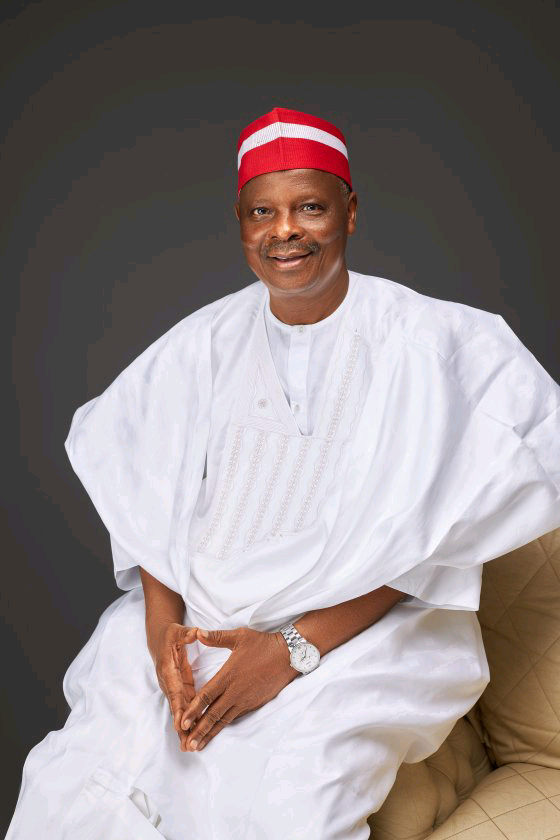
• Rabiu Musa Kwankwaso, former Kano State governor and national leader of the New Nigeria Peoples Party (NNPP);
• The Miyetti Allah Cattle Breeders Association of Nigeria (MACBAN);
• Miyetti Allah Kautal Hore;
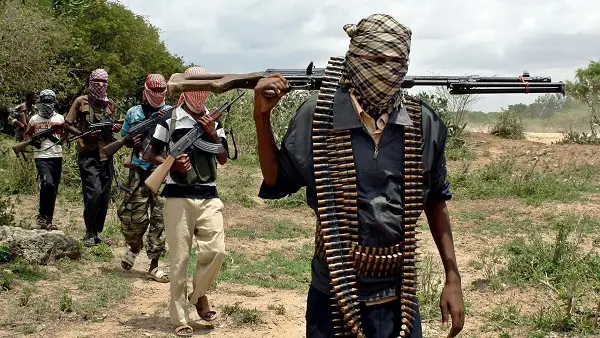
• And other groups described in the bill as “Fulani-ethnic nomad militias in Nigeria.”
The legislation also directs the Secretary of State to determine whether certain Fulani-ethnic militias meet the criteria for designation as a Foreign Terrorist Organization (FTO) under Section 219 of the U.S. Immigration and Nationality Act.
Lawmakers argue that some of these groups have engaged in acts that meet the statutory definition of terrorist activity, including targeted killings, hostage-taking, armed assaults, massacres and forced displacement.
In its findings, the bill asserts that systemic religious persecution in Nigeria has persisted since at least 2009, perpetrated by Boko Haram, Islamic State West Africa Province (ISWAP), Fulani militant groups and other extremist organizations.
It highlights a series of violent incidents in Benue and Plateau states between May 2023 and May 2025 – including attacks in Umogidi, Mgban and Yelwata, as well as Christmas Eve massacres in 2023 and 2024 and Holy Week and Easter attacks in 2024 and 2025. According to the bill’s findings, more than 9,500 people — most of them Christians — were killed in those incidents, while over half a million were displaced.
The legislation sharply criticizes what it describes as the Nigerian government’s “routine denial” of religious persecution and its failure to adequately intervene in some attacks, including an October 14, 2025 massacre in Plateau State.
It calls on Washington to use “all available diplomatic, humanitarian, economic, and security tools” to pressure Nigeria to end impunity, protect Christian communities, repeal blasphemy laws, release prisoners detained for their faith, and enable the safe return of internally displaced persons.
The bill further instructs the Secretary of State to assess whether U.S. security assistance risks enabling persecution and to examine Nigeria’s compliance with international religious freedom standards.
The legislative push follows President Donald Trump’s November 2025 decision to redesignate Nigeria as a Country of Particular Concern, a move the bill’s sponsors praised as justified.
In December 2025, the Trump administration authorized coordinated strikes with Nigerian forces against what it described as Islamic State targets, marking a significant escalation in U.S. engagement.
Meanwhile, Nigeria’s military confirmed that approximately 200 U.S. troops are expected to deploy to the country in the coming weeks. The personnel, Nigerian officials say, will provide technical training and advisory support but will not engage in combat operations.
Maj. Gen. Samaila Uba, spokesperson for Nigeria’s Defence Headquarters, said the deployment was requested by Abuja under the framework of the U.S.-Nigeria Joint Working Group.
“These personnel do not serve in a combat capacity and will not assume a direct operational role,” Uba said, emphasizing that Nigerian forces will retain full command authority and lead all missions.
The Pentagon had earlier acknowledged sending a small team to Nigeria following the Christmas Day strikes, though details were limited.
The inclusion of Rabiu Kwankwaso in the proposed sanctions list has triggered sharp backlash from his party, the New Nigeria Peoples Party (NNPP). (ephemeralnews.com.ng)